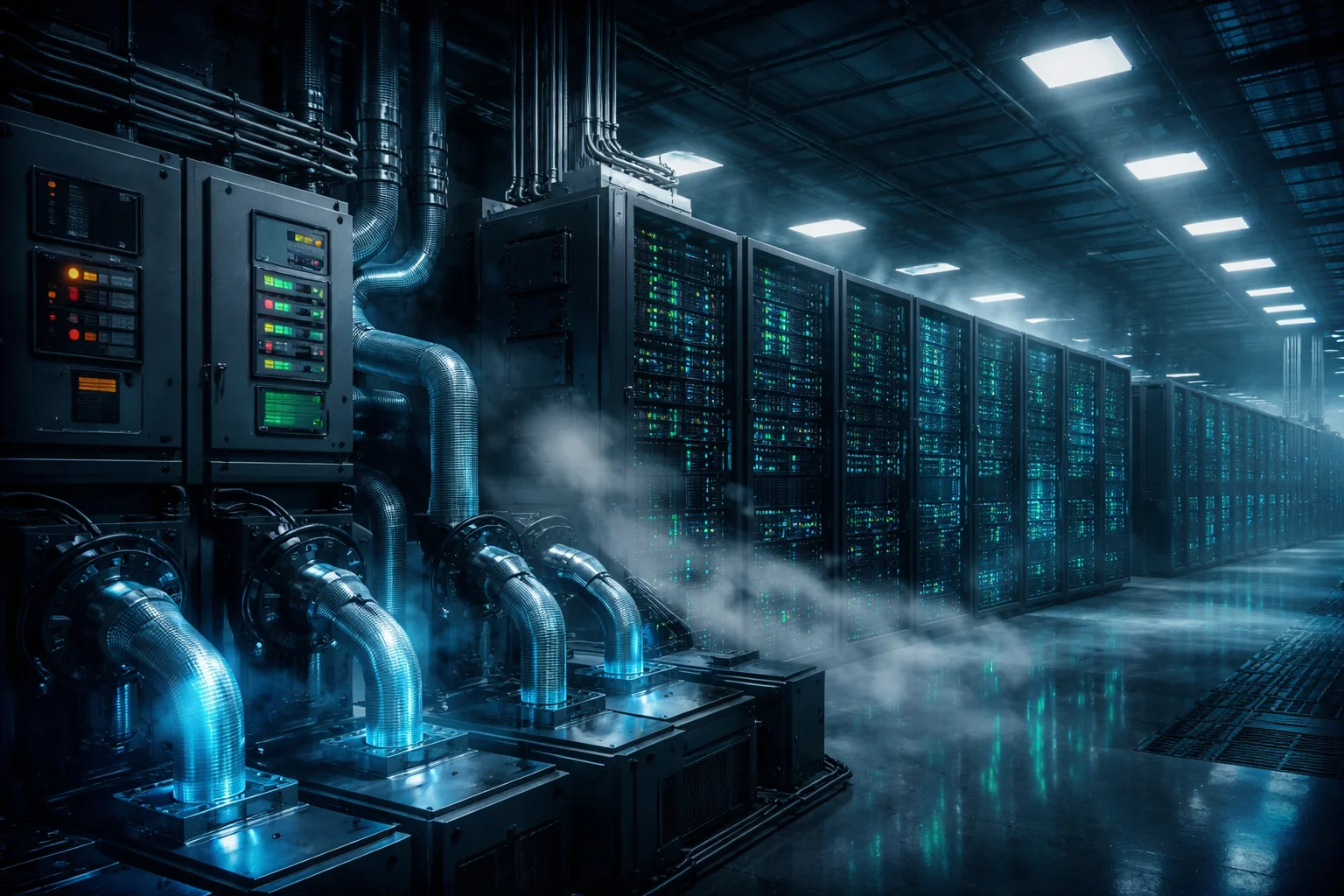
The Hidden Cost of AI: Power, Cooling, and the Datacenter Crisis
Introduction
Artificial Intelligence has transformed from a research curiosity into the backbone of modern digital services, but this revolution comes with a massive infrastructure challenge that many organizations are only beginning to understand. While executives focus on AI's transformative capabilities and ROI, infrastructure teams face an unprecedented reality: AI workloads consume exponentially more power than traditional computing tasks, creating a cascading crisis that affects everything from electricity grid stability to cooling system capacity.
The numbers tell a stark story. A single AI training run for a large language model can consume as much electricity as hundreds of homes use in an entire year. GPU clusters running inference workloads operate at power densities that can exceed 100 kilowatts per rack—ten times higher than conventional server deployments. This dramatic shift is forcing datacenter operators to completely rethink their approach to power distribution, cooling systems, and facility design.
For infrastructure engineers, understanding AI's power requirements isn't just about capacity planning—it's about architectural survival. Organizations that fail to properly account for AI's energy demands face service disruptions, thermal shutdowns, and infrastructure costs that can quickly spiral into millions of dollars in unplanned upgrades.
What Is AI Datacenter Power Usage?
AI datacenter power usage refers to the electrical energy consumption patterns and requirements specific to artificial intelligence workloads, which differ dramatically from traditional computing tasks in both scale and characteristics. Unlike conventional server workloads that typically maintain steady, predictable power draw patterns, AI workloads create sustained high-power demand with minimal idle periods.
The fundamental driver of AI's massive power consumption lies in the parallel processing requirements of neural networks. Modern AI models, particularly large language models and deep learning systems, require thousands of mathematical operations to be performed simultaneously across hundreds or thousands of processing cores. This parallel computation demand translates directly into electrical power consumption that can range from 300 watts per GPU for inference workloads to over 700 watts per GPU during intensive training operations.
AI datacenter energy consumption encompasses three primary categories: compute power for processing units, cooling power to manage heat dissipation, and supporting infrastructure power for networking, storage, and facility operations. The compute component typically represents 60-70% of total consumption, while cooling can account for 25-35%, with the remainder supporting ancillary systems.
The infrastructure power requirements for AI workloads create unique challenges because they operate at consistently high utilization rates. Traditional server deployments might average 20-30% CPU utilization, allowing for significant power efficiency gains through dynamic scaling and idle states. AI workloads, particularly during training phases, maintain 80-95% utilization rates for extended periods, eliminating most opportunities for power optimization through reduced activity.
How AI Power Consumption Works
AI workloads generate exceptional power demands through the computational intensity required for matrix operations, the fundamental mathematical building blocks of neural networks. Each AI inference request triggers thousands of multiply-accumulate operations across specialized processing units, creating sustained electrical demand that far exceeds traditional computing patterns.
The power consumption profile begins with the processing units themselves. Graphics Processing Units (GPUs), the workhorses of AI computation, contain thousands of cores optimized for parallel mathematical operations. A single NVIDIA H100 GPU, commonly deployed in AI clusters, can consume up to 700 watts under full load—equivalent to running seven high-end desktop computers simultaneously. When deployed in clusters of 8 GPUs per server, a single server can draw over 5,600 watts, compared to 300-500 watts for traditional servers.
Memory systems contribute significantly to AI's power demands. AI models require massive amounts of high-bandwidth memory to store model parameters and intermediate calculations. High Bandwidth Memory (HBM) modules, essential for AI workloads, consume substantially more power than conventional server memory while operating at higher frequencies and voltages to achieve the necessary data throughput rates.
The power delivery infrastructure must accommodate these extreme demands through specialized power distribution systems. AI servers require multiple high-capacity power supplies, often configured in redundant arrangements, with power delivery capabilities that can exceed 6,000 watts per server. This necessitates 208V or higher voltage systems rather than standard 120V configurations to manage current loads effectively.
Cooling systems create a secondary power burden because AI workloads generate heat proportional to their electrical consumption. The cooling infrastructure, including chillers, pumps, fans, and heat exchangers, typically consumes an additional 0.4-0.6 watts for every watt of compute power, meaning a 1-megawatt AI cluster requires 400-600 kilowatts of additional cooling power.
Key Components and Architecture
The architecture supporting AI datacenter power requirements involves several critical components that work together to deliver, distribute, and manage the massive electrical demands of AI workloads.
Power Generation and Grid Connection
AI datacenters require substantial electrical service connections, often demanding 10-100 megawatts of continuous power capacity. This necessitates direct connections to high-voltage transmission lines and dedicated substations to step down power to usable voltages. Many AI-focused facilities require multiple redundant grid connections to ensure reliability, as even brief power interruptions can result in hours or days of lost training time.
Backup power systems for AI facilities involve massive diesel generator installations, often requiring 20-50 generators rated at 2+ megawatts each to provide adequate redundancy. These systems must be capable of sustained operation for extended periods, as AI workloads cannot be rapidly shut down and restarted without significant computational cost.
Power Distribution Infrastructure
Within the facility, power distribution systems utilize higher voltages than traditional datacenters to manage the extreme current demands efficiently. Three-phase 480V systems are common, with some installations utilizing 600V or higher to reduce current loads and associated infrastructure costs. Power distribution units (PDUs) must be sized accordingly, with many AI installations requiring PDUs rated at 100+ kilowatts per rack.
Uninterruptible Power Supply (UPS) systems for AI workloads face unique challenges due to the sustained high-power draw. Traditional UPS systems designed for brief power interruptions must be substantially oversized to handle AI workloads, with installations often requiring 2-3x the UPS capacity compared to traditional datacenter applications.
Cooling Architecture
Cooling systems for AI datacenters employ advanced architectures to manage the extreme heat generation. Liquid cooling solutions become essential at high power densities, with many installations utilizing direct-to-chip liquid cooling that circulates coolant directly to GPU heat sinks. These systems can remove 300-500 watts per GPU directly, reducing the burden on facility-level cooling systems.
Facility cooling typically employs high-efficiency chiller plants with redundant cooling loops. Many AI datacenters utilize free cooling modes whenever possible, taking advantage of outside air temperatures to reduce mechanical cooling loads. Evaporative cooling systems become particularly attractive in suitable climates, offering significant energy efficiency improvements.
Monitoring and Management Systems
Power monitoring for AI datacenters requires real-time visibility into power consumption patterns at multiple levels, from individual GPU monitoring to facility-wide power usage effectiveness (PUE) tracking. Advanced monitoring systems utilize high-resolution power metering to identify optimization opportunities and prevent overload conditions.
Intelligent load management systems help optimize power usage by scheduling AI workloads based on power availability and cooling capacity. These systems can automatically migrate workloads between different facility zones or defer non-critical training jobs during peak power demand periods.
Use Cases and Applications
AI datacenter power consumption patterns vary significantly based on the specific applications and workload types being deployed. Understanding these patterns enables infrastructure teams to design appropriate power and cooling systems for their specific use cases.
Large Language Model Training
Training large language models represents one of the most power-intensive AI applications. These workloads typically involve clusters of 1,000-10,000 GPUs operating continuously for weeks or months. The distributed training process requires constant communication between processing nodes, maintaining high power consumption across all components throughout the training duration. A typical LLM training cluster consuming 10 megawatts can cost $50,000-100,000 per day in electricity alone, making power efficiency critical for economic viability.
AI Inference Serving
AI inference workloads, while less power-intensive per operation than training, create sustained power demands due to their 24/7 operational requirements. Modern AI services handling millions of inference requests daily require clusters of hundreds of GPUs operating continuously. These deployments often prioritize low latency over power efficiency, requiring GPUs to maintain ready states that prevent power-saving modes from being effective.
Computer Vision and Image Processing
Computer vision applications, particularly those processing high-resolution images or video streams, create unique power consumption patterns. These workloads often involve burst processing where power consumption spikes dramatically during image analysis periods, followed by brief idle periods. The variable nature of these workloads requires power infrastructure capable of handling rapid load changes while maintaining stable power delivery.
Scientific Computing and Research
AI applications in scientific computing, such as climate modeling, drug discovery, and materials science, often combine training and inference workloads with traditional high-performance computing tasks. These mixed workloads create complex power consumption patterns that require flexible infrastructure capable of supporting diverse computational requirements.
Benefits and Challenges
The power requirements of AI datacenters create both significant challenges and unexpected opportunities for infrastructure teams. Understanding both aspects enables better strategic planning and resource allocation.
Infrastructure Benefits
High-density AI deployments can achieve superior space utilization compared to traditional server farms. While individual racks consume more power, the computational density per square foot can be 5-10x higher than conventional deployments, potentially reducing facility footprint requirements and associated real estate costs.
Consistent power loads from AI workloads enable better power purchase agreements with utilities. The predictable, sustained demand profile makes AI datacenters attractive customers for utilities seeking stable load patterns, often resulting in favorable electricity rates for high-volume consumers.
Advanced cooling systems required for AI workloads often provide efficiency benefits for mixed-use datacenters. The sophisticated cooling infrastructure can support traditional workloads more efficiently than legacy cooling systems, reducing overall facility PUE ratings.
Economic Challenges
Capital expenditure requirements for AI power infrastructure can exceed traditional datacenter deployments by 3-5x. The specialized power distribution, cooling systems, and backup power requirements represent substantial upfront investments that must be justified against AI workload revenue potential.
Operational electricity costs for AI workloads can consume 40-60% of total operational expenses, compared to 15-25% for traditional datacenters. This shift requires new financial models and careful consideration of electricity pricing trends in facility location decisions.
Utility grid constraints increasingly limit AI datacenter deployment options. Many locations lack sufficient electrical grid capacity to support large AI installations, forcing organizations to consider less optimal locations or invest in grid infrastructure improvements.
Technical Challenges
Thermal management becomes critical at AI power densities. Traditional air cooling systems become ineffective above 15-20 kilowatts per rack, requiring expensive liquid cooling solutions that add complexity and potential failure points to datacenter operations.
Power quality issues become more pronounced with AI workloads due to their sensitivity to voltage fluctuations and harmonic distortion. The switching characteristics of AI processors can create power quality problems that affect other datacenter equipment, requiring sophisticated power conditioning systems.
Scalability challenges emerge when expanding AI capacity within existing facilities. The power and cooling infrastructure required for AI expansion often exceeds the spare capacity available in traditional datacenters, requiring substantial facility modifications or new construction.
Getting Started with AI Infrastructure Implementation
Implementing infrastructure capable of supporting AI workloads requires careful planning and phased approaches that account for both immediate needs and future growth requirements.
Assessment and Planning Phase
Begin with comprehensive power audits of existing facilities to understand available electrical capacity, cooling capabilities, and infrastructure limitations. This assessment should include utility grid capacity analysis, as many facilities discover that local electrical infrastructure cannot support significant AI workloads without upgrades.
Develop power consumption models based on planned AI workloads. Different AI applications have vastly different power profiles, so understanding specific requirements enables more accurate infrastructure planning. Include growth projections that account for model size increases and expanded AI adoption across the organization.
Create thermal mapping studies for proposed AI deployments. High-power-density AI equipment creates localized hot spots that can affect surrounding equipment. Computational fluid dynamics (CFD) modeling helps identify optimal equipment placement and cooling requirements.
Infrastructure Preparation
Upgrade power distribution systems before deploying AI workloads. This typically involves installing higher-voltage power distribution, upgrading transformers and switchgear, and implementing advanced power monitoring systems. Plan for 2-3x the initial power requirements to accommodate growth and redundancy needs.
Implement advanced cooling solutions appropriate for the planned power densities. For power densities below 20kW per rack, optimized air cooling with hot aisle containment may suffice. Above 20kW per rack, liquid cooling systems become necessary, with direct-to-chip cooling required for the highest power densities.
Deploy comprehensive monitoring systems that provide real-time visibility into power consumption, cooling effectiveness, and infrastructure utilization. These systems become critical for managing the complex interactions between AI workloads and facility systems.
Deployment and Optimization
Start with pilot deployments that allow infrastructure teams to understand actual power consumption patterns and optimize systems before full-scale deployment. AI workload power consumption can vary significantly from vendor specifications, making real-world testing essential.
Implement workload scheduling and power management systems that optimize power usage across available infrastructure capacity. These systems can automatically balance workloads based on power availability, cooling capacity, and electricity pricing patterns.
Establish operational procedures for managing high-power AI workloads, including emergency shutdown procedures, cooling system maintenance protocols, and power quality monitoring practices. The concentrated power densities of AI deployments require specialized operational expertise.
Continuous Monitoring and Improvement
Develop ongoing optimization programs that continuously improve power usage effectiveness (PUE) and cooling efficiency. AI workloads provide consistent loading that enables fine-tuning of cooling systems and power distribution for optimal efficiency.
Plan regular infrastructure capacity reviews that account for AI model growth trends and expanded deployment requirements. The rapid evolution of AI technology means that power requirements can increase significantly with new model generations or expanded applications.
Implement predictive maintenance programs for critical power and cooling systems. The high-value nature of AI workloads makes infrastructure reliability paramount, justifying advanced maintenance approaches that prevent unexpected failures.
Key Takeaways
• AI workloads consume 5-10x more power per server than traditional applications, with individual GPU servers requiring 4,000-6,000+ watts compared to 300-500 watts for conventional servers
• Cooling systems for AI datacenters require 40-60% additional power consumption beyond compute loads, compared to 20-30% for traditional datacenters
• Power distribution infrastructure must be upgraded to handle higher voltages (480V-600V) and extreme current demands that can exceed 100 kilowatts per rack
• AI training workloads maintain 80-95% utilization rates continuously, eliminating power optimization opportunities available with traditional variable workloads
• Electricity costs become 40-60% of operational expenses for AI datacenters versus 15-25% for conventional facilities, fundamentally changing economic models
• Liquid cooling systems become essential above 20 kilowatts per rack power density, requiring specialized expertise and maintenance procedures
• Grid capacity constraints limit deployment locations for large AI facilities, often requiring direct utility partnerships and infrastructure investments
• Backup power systems must be substantially oversized for AI workloads due to sustained high-power consumption patterns and restart costs
• Real-time power monitoring and automated workload management systems are critical for preventing overload conditions and optimizing efficiency
• Implementation requires phased approaches starting with comprehensive facility assessments and pilot deployments to validate actual power consumption patterns before full-scale deployment