The Rise of Autonomous AI Agents: How Systems Like Hermes Are Turning Ideas Into Action
The enterprise AI landscape is witnessing a fundamental shift from reactive systems to proactive ones.
In-depth technical articles covering quantum computing, AI infrastructure, Linux performance, HPC, and enterprise tooling.

The enterprise AI landscape is witnessing a fundamental shift from reactive systems to proactive ones.
A practical guide to AI automation for small businesses, focused on customer support, intake forms, content workflows, reporting, and internal tools.
How Apparix stores can use automation for product imports, SEO landing pages, checkout improvements, reporting, outreach, and maintenance workflows.

While public attention fixates on conversational AI and large language models, a parallel transformation is occurring across critical infrastructure, healthcare systems, and scientific research.

Enterprise computing costs have reached an inflection point. Companies running large-scale AI workloads report infrastructure expenses consuming 30-60% of their operational budgets, while traditional compute-intensive industries face similar pressures from rising energy costs and hardware constra...

Banking institutions process trillions of dollars daily through systems that rely on complex mathematical operations — risk calculations spanning millions of variables, portfolio optimizations across global markets, and cryptographic protocols protecting customer data.

The enterprise cloud strategy landscape has undergone a fundamental shift. After nearly two decades of aggressive cloud migration, organizations are systematically moving workloads back from public cloud providers to on-premises infrastructure and hybrid cloud architectures.

Enterprise software development has reached a complexity tipping point. Organizations that once celebrated the flexibility of choosing from hundreds of DevOps tools now find themselves drowning in operational overhead.

The artificial intelligence industry has focused intensively on the computational demands of training large language models, with companies spending billions on massive GPU clusters to develop foundation models.

Traditional GPU architectures prioritize compute density over memory access patterns, a design philosophy that worked well for graphics rendering and early machine learning workloads.

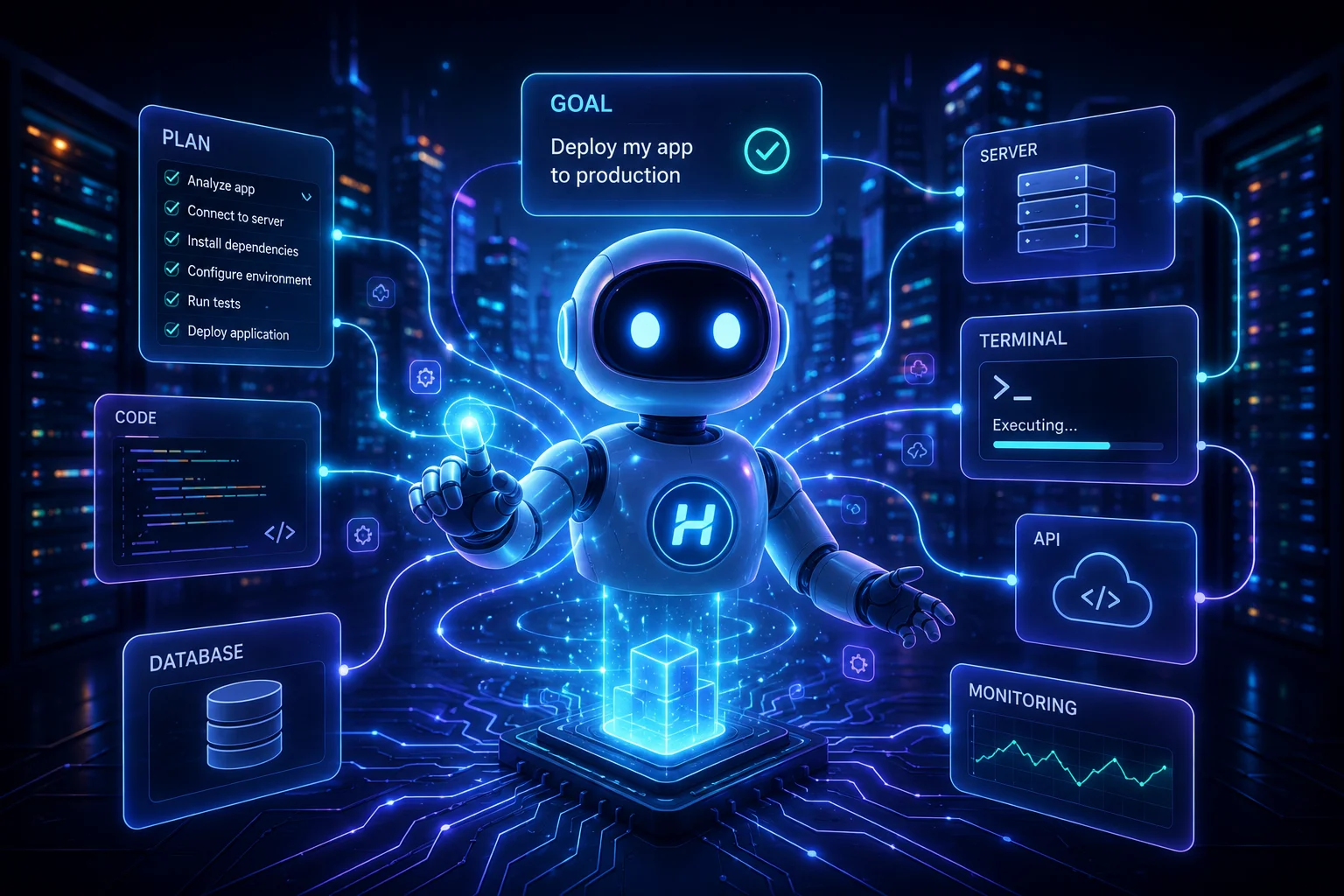
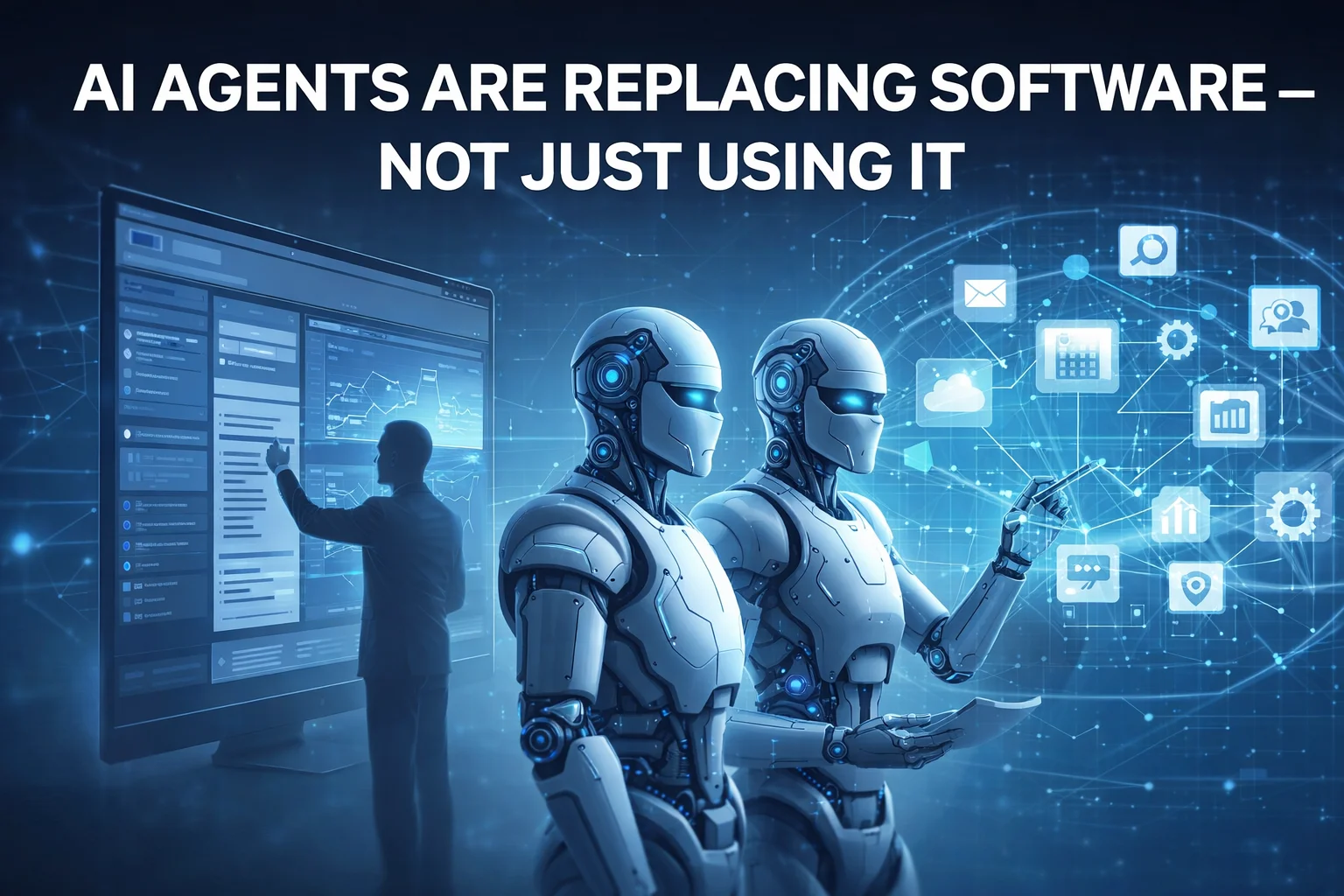
Enterprise software is experiencing a fundamental architectural shift. Rather than building traditional applications that users operate through interfaces, organizations are deploying AI agents that autonomously execute complex workflows by orchestrating existing tools and services.

The traditional network perimeter—once the cornerstone of enterprise security—has become a liability rather than an asset.

Enterprise cybersecurity budgets exceeded $150 billion globally in 2023, driven largely by the escalating sophistication of attacks against traditional cryptographic systems.

The security infrastructure underpinning modern digital commerce, government communications, and enterprise networks relies fundamentally on mathematical problems that classical computers cannot solve efficiently.

The enterprise computing landscape is witnessing a fundamental architectural shift that reverses three decades of distributed systems evolution.

Enterprise AI infrastructure has reached an inflection point. Organizations deploying large-scale AI workloads are encountering fundamental physical and architectural constraints that cannot be solved by simply adding more hardware.
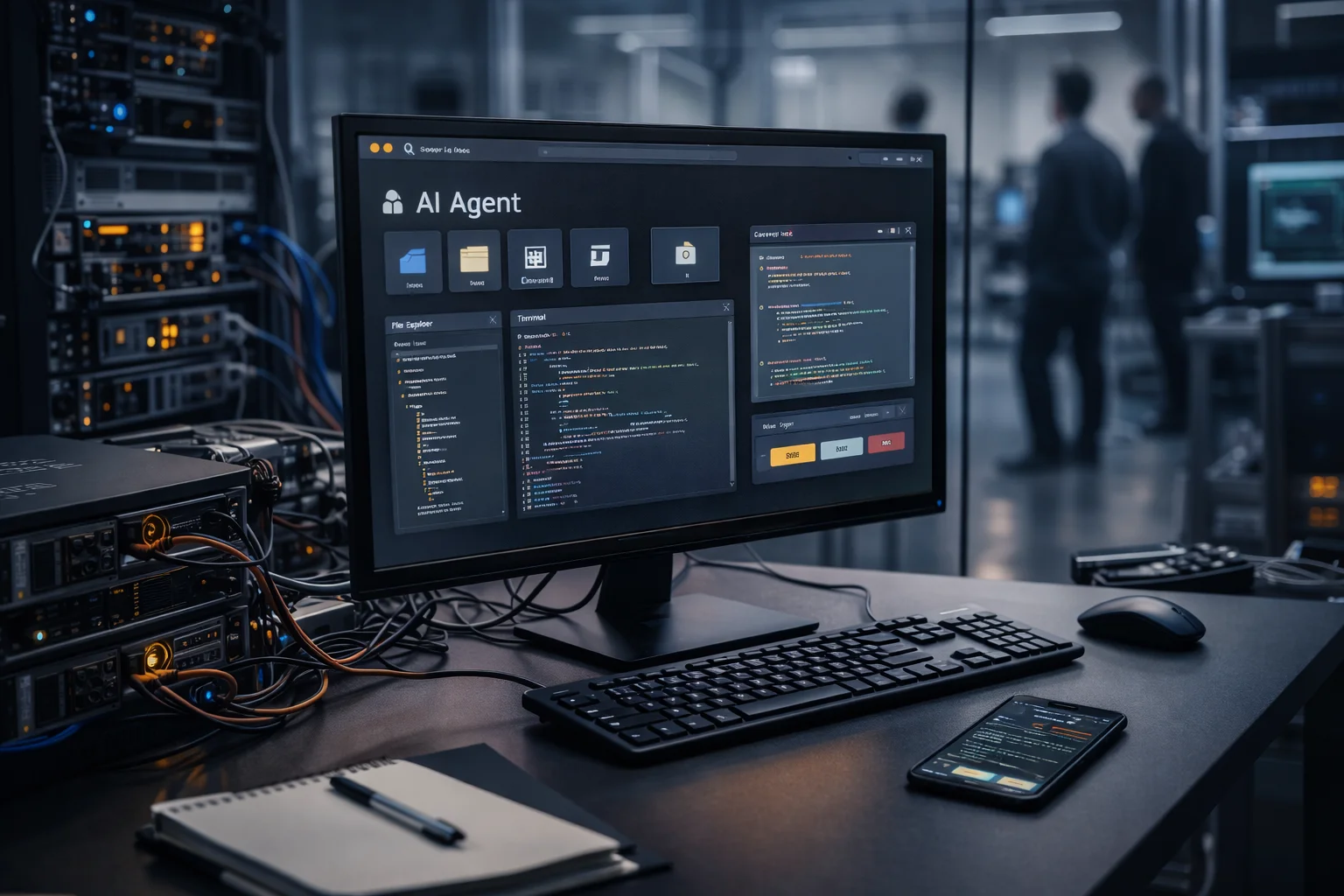
The artificial intelligence landscape is undergoing a fundamental architectural shift. While conversational interfaces like ChatGPT and Claude captured enterprise attention with their ability to generate text and answer questions, the next phase centers on AI systems that can execute tasks direct...

The quantum computing industry is undergoing a fundamental shift. What began as a pursuit of theoretical physics is increasingly becoming a discipline of systems engineering.

The quantum computing landscape has undergone substantial shifts since 2024, with enterprise investments now exceeding $8 billion annually and clear delineation emerging between genuine technical progress and market positioning.

Despite continuous advances in GPU performance and specialized AI accelerators, the pace of AI training improvements is decelerating across the industry.

Enterprise AI infrastructure has entered a period of rapid divergence. While the industry expected convergence around standard architectures—similar to how cloud computing consolidated around patterns like microservices and containers—AI systems are instead proliferating into increasingly special...

AI agents are fundamentally altering the landscape of cybersecurity threats, moving beyond simple automation to sophisticated, autonomous decision-making systems that can adapt their attack strategies in real-time.

The quantum computing industry is confronting a fundamental shift in its primary technical challenges.

An enterprise-grade comparison covering Linux and Windows Are Solving Very Different Problems in 2026 for technical decision-makers.

The buildout of AI infrastructure today mirrors the chaotic early development of electrical power systems in the late 1800s and early 1900s.

The surge in artificial intelligence workloads has created an unprecedented stress test for modern data center infrastructure.

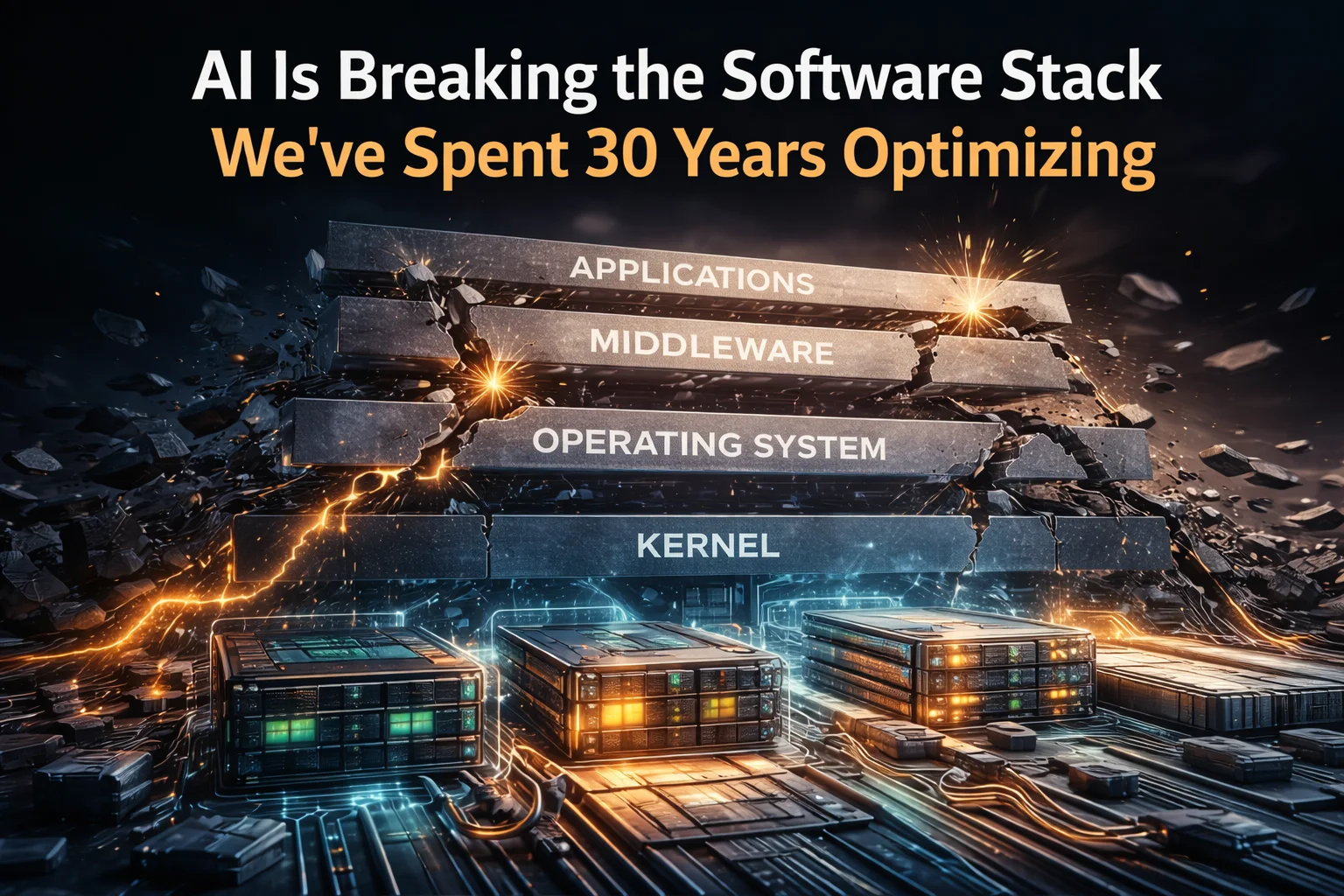
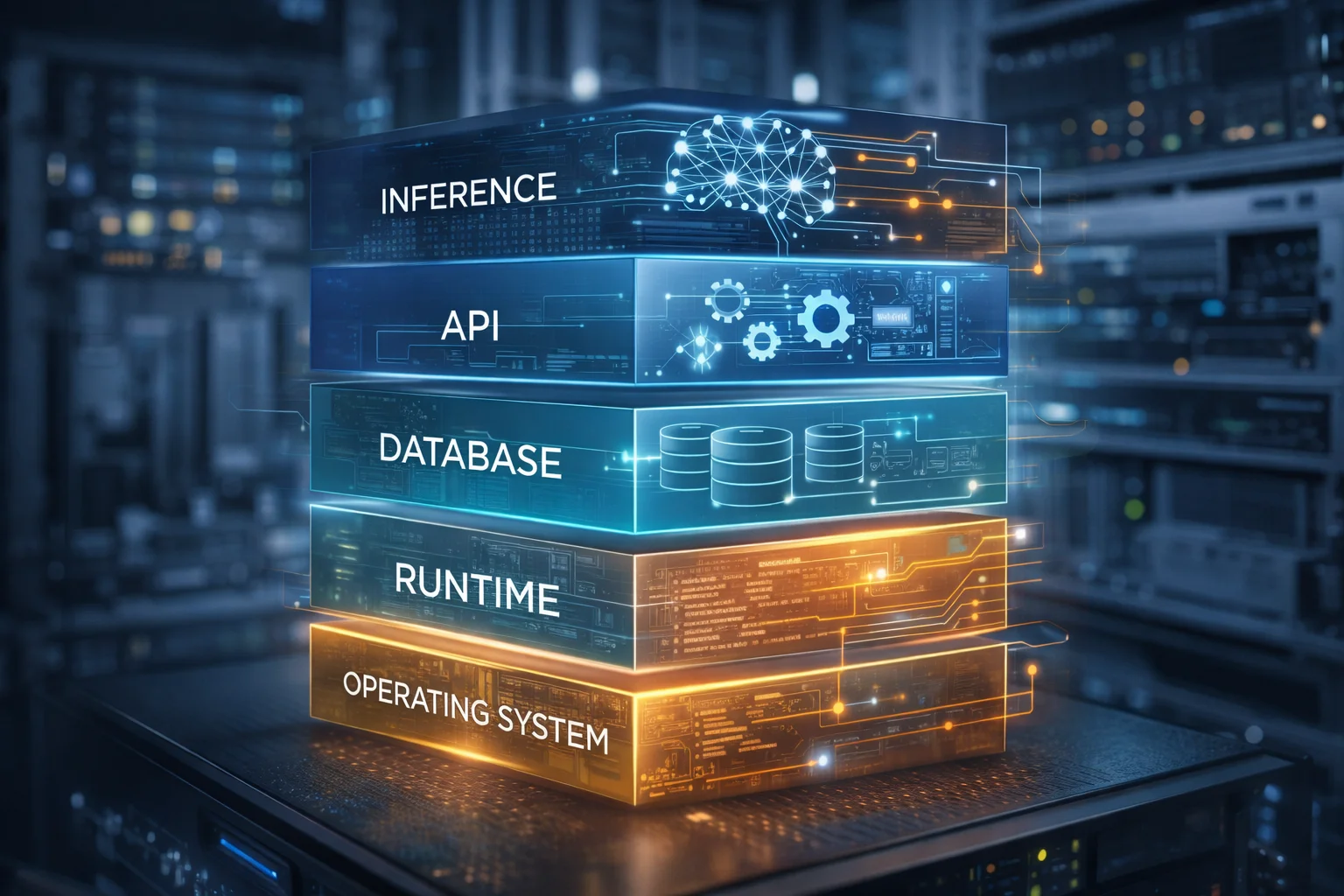
The software stack that powers modern enterprises—from web servers to databases to application frameworks—was designed for a fundamentally different computational model than what artificial intelligence demands.

High-performance computing infrastructure has reached an inflection point. Traditional HPC clusters, designed primarily for physics simulations, computational fluid dynamics, and mathematical modeling, now must accommodate machine learning training, AI inference, and hybrid workflows that combine...

The Linux kernel ecosystem has reached an inflection point where incremental improvements compound into significant operational advantages. Linux kernel 6.

The quantum computing industry has generated significant enterprise investment and research momentum, with companies like IBM, Google, and Rigetti making substantial advances in quantum processing capabilities.

Artificial intelligence workloads are fundamentally altering how software systems are designed, deployed, and operated.

Linux has crossed from experimental gaming platform to viable gaming ecosystem without fanfare or industry proclamations.

While much of the artificial intelligence discussion centers on large language models and cloud-based training infrastructure, a more fundamental shift is occurring in how organizations deploy AI in production environments.

Corporate IT departments and individual users are increasingly evaluating alternatives to Windows as Microsoft's operating system faces mounting concerns over privacy, forced updates, hardware requirements, and subscription-based features.

High-performance computing (HPC) servers have undergone fundamental architectural changes as workloads increasingly blur the lines between traditional scientific computing, AI training, and data analytics.

The quantum computing industry has developed an unhealthy obsession with qubit count. IBM announces 1,000-qubit processors, Google demonstrates quantum supremacy with 70 qubits, and IonQ markets systems with 32 "algorithmic qubits.

Enterprise adoption of AI chatbots has matured beyond early experimentation into production deployments that demand specific capabilities for distinct use cases. The choice between ChatGPT, Claude, and Gemini increasingly hinges on technical requirements rather than general AI prowess.

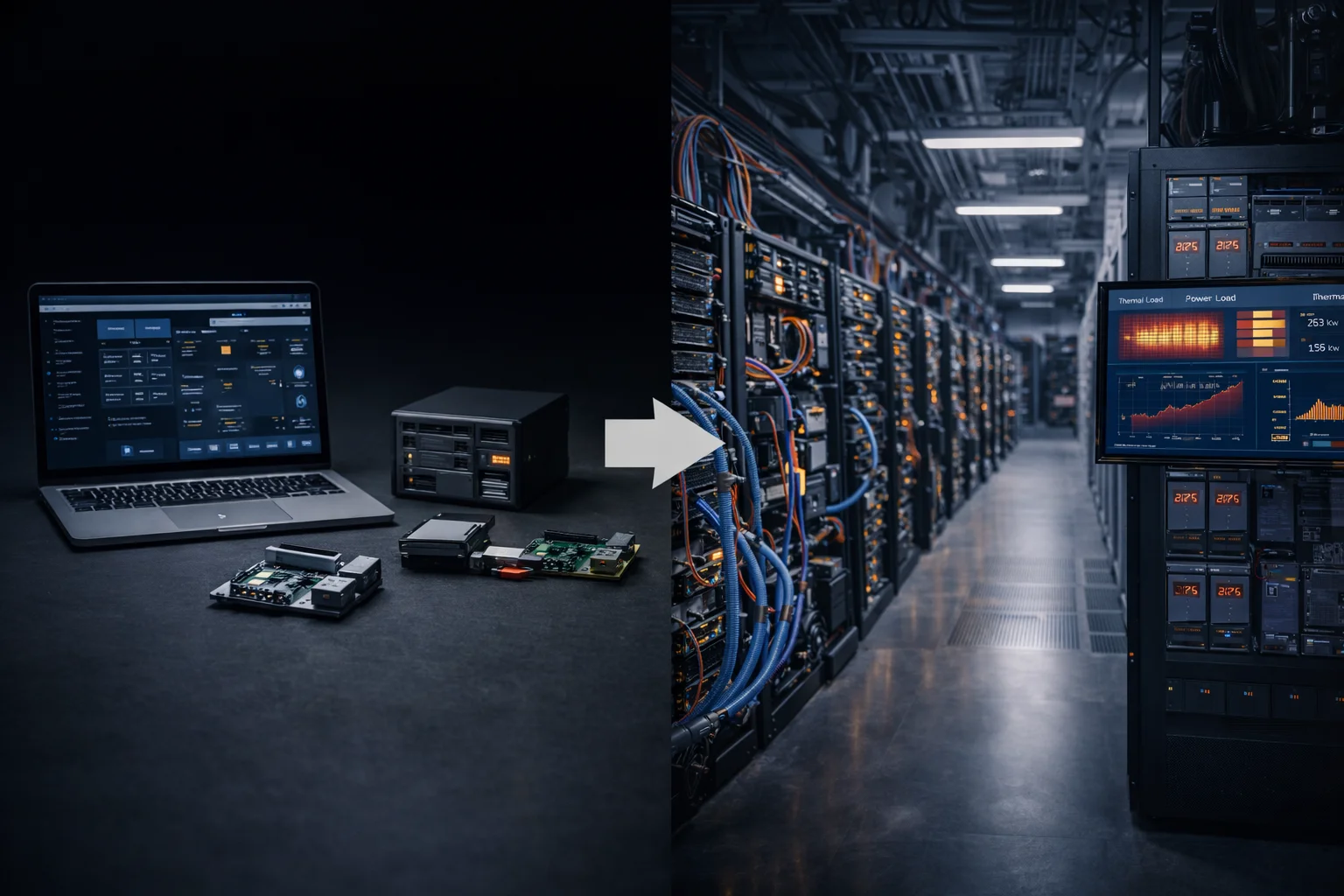
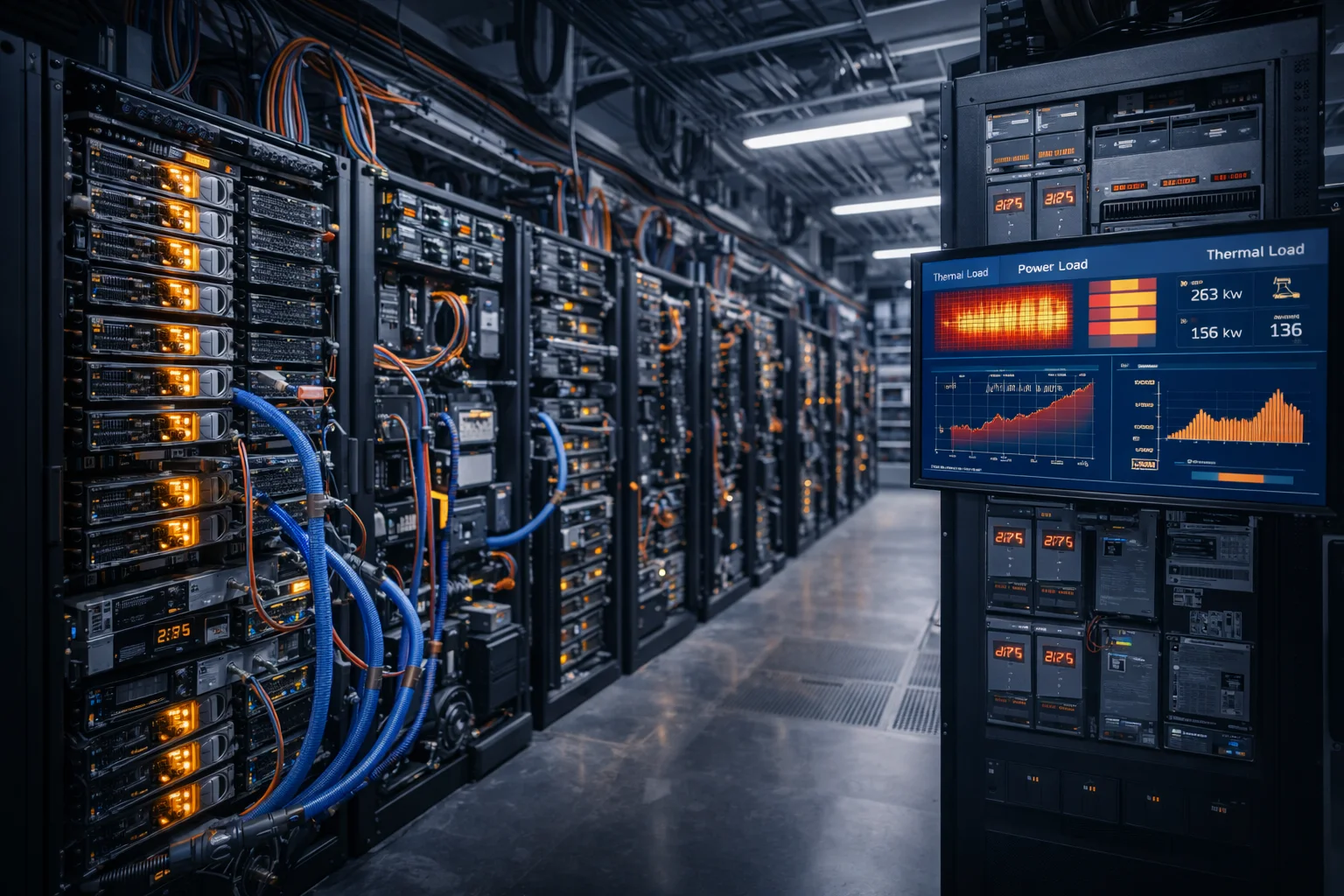
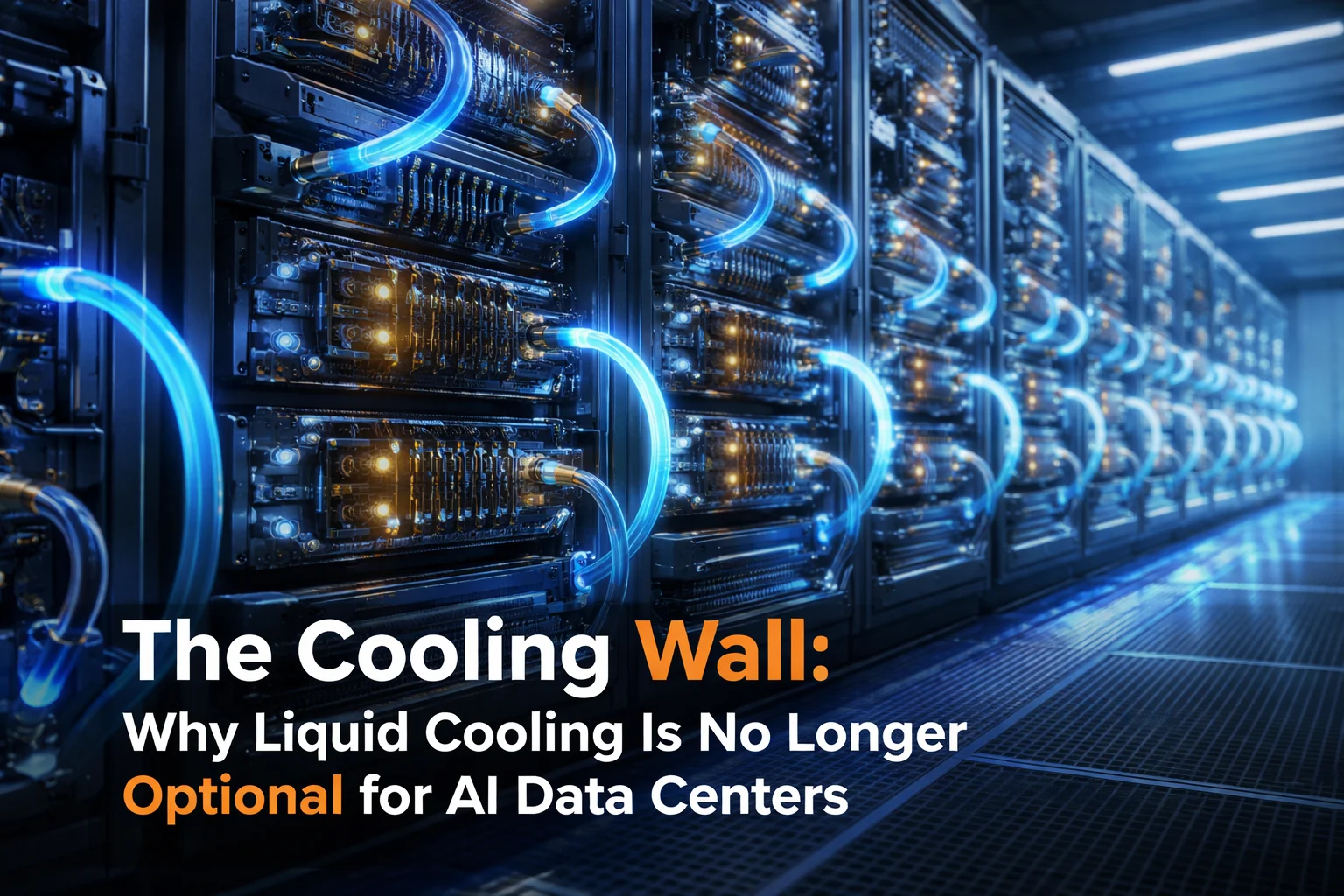
An enterprise-grade challenges covering The Cooling Wall: Why Liquid Cooling Is No Longer Optional for AI Data Centers for technical decision-makers.

When quantum computing companies announce their latest processors, the headline number is almost always qubit count. IBM's 1,121-qubit Condor, Google's 70-qubit Sycamore, or IonQ's 64-qubit systems dominate the technical press.

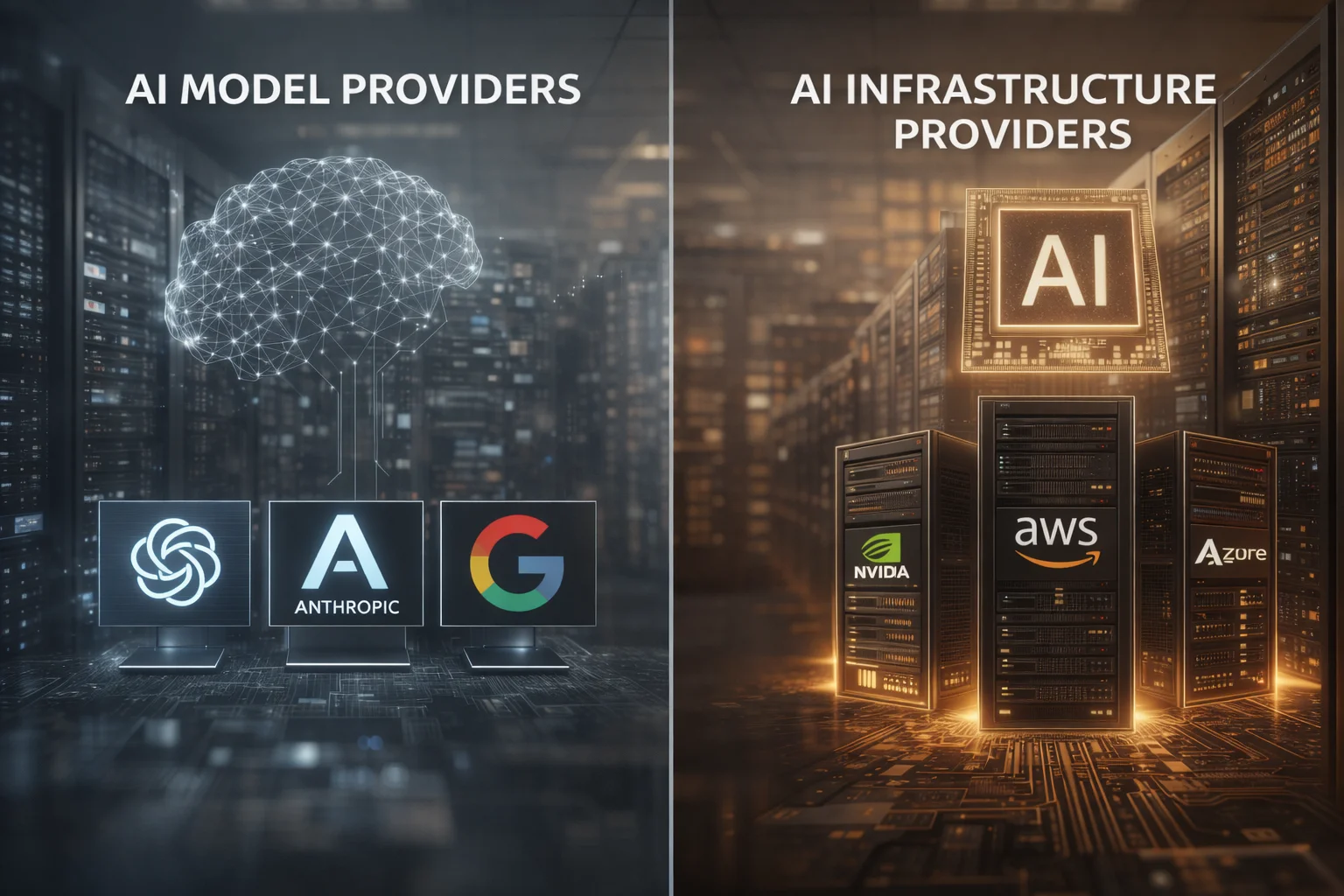
The artificial intelligence ecosystem has evolved into a complex, multi-layered marketplace where different types of providers serve distinct roles in the value chain. Understanding the distinction between AI model providers and AI infrastructure providers is crucial for enterprise decision-makers,

Enterprise data centers worldwide are encountering a fundamental constraint that threatens to limit artificial intelligence deployment at scale: electrical power capacity.

The cybersecurity landscape has undergone a fundamental transformation as artificial intelligence capabilities become increasingly accessible to both defenders and attackers. While AI-powered automation tools enable threat actors to launch more sophisticated attacks at unprecedented scale and speed,

The intersection of quantum computing and cryptocurrency security represents one of the most critical challenges facing modern financial infrastructure. As quantum computers advance from theoretical concepts to practical machines, the cryptographic foundations that protect billions of dollars in dig

Operating system security has become paramount as cyber threats evolve and digital infrastructure becomes increasingly critical to business operations and personal privacy. With sophisticated attack vectors targeting everything from kernel vulnerabilities to supply chain compromises, the choice of o


The intersection of quantum computing and artificial intelligence represents one of the most fascinating frontiers in computational science. While classical AI systems have achieved remarkable success in natural language processing through transformer models and large language models, a fundamental

While executives chase the latest AI breakthroughs and machine learning models, a quieter revolution is determining which organizations actually succeed in the long run. The companies pulling ahead aren't necessarily those with the most sophisticated algorithms or the largest datasets...

As artificial intelligence transforms computing landscapes across industries, from autonomous vehicles to financial trading systems, a fundamental tension emerges between AI's probabilistic nature and the deterministic systems that form our computing foundation. While headlines focus on the latest b

Artificial Intelligence has transformed from a research curiosity into the backbone of modern digital services, but this revolution comes with a massive infrastructure challenge that many organizations are only beginning to understand.

A comprehensive explainer covering Inside the AI Infrastructure Boom: GPUs, Power, Cooling, and the New Bottlenecks for infrastructure professionals.

Creating your own VPN server provides complete control over your network traffic, eliminates dependency on third-party services, and ensures maximum privacy protection. This comprehensive guide walks you through building a production-ready OpenVPN server on Linux.

The artificial intelligence revolution has reached a pivotal inflection point. Global AI infrastructure spending has crossed the $2.5 trillion threshold, representing the largest technology infrastructure investment cycle in human history.

The quantum computing landscape has reached a pivotal moment where theoretical concepts are transitioning into practical realities. Two terms have emerged as central to understanding this evolution: quantum supremacy and quantum advantage.

Linux security requires a multi-layered approach combining system hardening, proper configuration, and proactive monitoring. In this comprehensive guide, you'll learn ten essential security practices that form the foundation of a robust Linux security posture.

High-Performance Computing (HPC) represents the pinnacle of computational power, where organizations tackle the most demanding scientific, engineering, and analytical workloads.

While artificial intelligence dominates technology headlines and cloud computing has transformed enterprise infrastructure, high-performance computing (HPC) continues to serve as the computational backbone for the world's most demanding workloads.

A comprehensive look at quantum supremacy milestones and their practical implications for enterprise IT strategy.

An enterprise-focused exploration of quantum error correction techniques and why they matter for practical quantum applications.

A practical comparison of on-premises GPU clusters and cloud AI services for enterprise machine learning workloads.

A comprehensive guide to implementing MLOps practices for enterprise machine learning systems.

Advanced kernel parameter optimization techniques for demanding enterprise applications.

Learn how to use eBPF for deep observability into Linux system performance.

Enterprise patterns for building resilient, highly available data center infrastructure.

Compare networking options for multi-GPU training clusters and understand the tradeoffs.

A practical comparison of Terraform and Pulumi for enterprise infrastructure automation.

Build a comprehensive observability stack for Kubernetes using open-source tools.