Summary
Kubernetes Dynamic Resource Allocation (DRA) reached general availability in Kubernetes v1.34, and that matters for AI infrastructure because accelerator scheduling is no longer just a matter of counting nvidia.com/gpu integers. DRA gives clusters a stable API group for describing devices, expressing workload claims, filtering by attributes, and allowing the scheduler to make more informed placement decisions.
The change is easy to underestimate. For years, the Kubernetes device-plugin model gave operators a workable path for exposing GPUs, FPGAs, NICs and other specialized hardware, but it treated many expensive devices as relatively coarse resources. That approach was enough for early GPU clusters and simple single-tenant jobs. It is a poor fit for shared accelerator fleets where platform teams care about model size, memory capacity, topology, device health, fractional sharing, administrative access and preparation steps that must complete before a workload starts.
DRA does not magically solve GPU utilization, nor does it remove the need for vendor drivers, admission controls or workload-aware scheduling policy. It does, however, move more of the accelerator contract into Kubernetes APIs. For enterprises standardizing AI platforms, that is the important part.
Why DRA is different from device plugins
The older device-plugin model mostly answers one question: does a node have a count of a named resource available? A Pod can request one or more units of that extended resource, and Kubernetes can place the Pod on a node where the device plugin has advertised sufficient capacity. That model is simple, stable and widely deployed, which is why it will remain in use for a long time.
AI infrastructure has outgrown the simplicity in several places. A workload may need a GPU with a specific memory size, interconnect property or partitioning mode. Another workload may be able to run on a preferred accelerator but fall back to two smaller devices. A troubleshooting job may require privileged administrative access to a device that normal tenants should never receive. A device may need external preparation before a Pod can safely bind to the node. A monitoring system may need to understand which devices were allocated to which Pods after scheduling has completed.
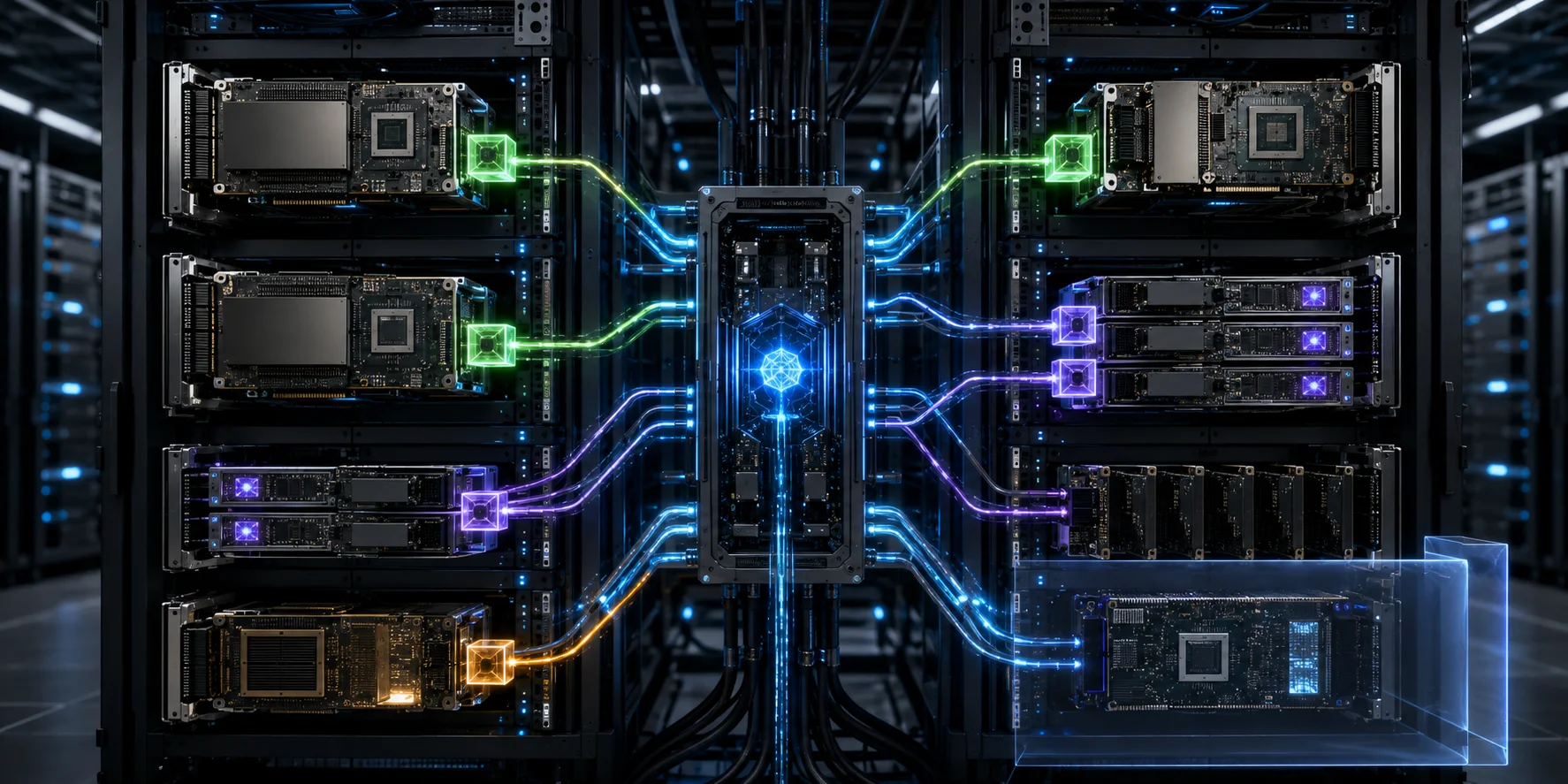
DRA introduces API objects that model those concerns more explicitly. DeviceClass defines categories of devices and the way they can be selected. ResourceClaim describes a workload request for access to a device or set of devices. ResourceClaimTemplate lets Kubernetes generate per-Pod claims for replicated workloads. ResourceSlice is published by drivers to describe the devices available in the cluster and the nodes that can access them.
That vocabulary is more complex than an extended resource count, but it is closer to the way accelerator fleets actually operate.
The enterprise angle: utilization with guardrails
The main business case for DRA is not developer convenience. It is utilization with guardrails. GPUs and other accelerators are too expensive to strand behind overly broad scheduling abstractions, but they are also too sensitive to expose through ad hoc privilege and labeling schemes.
The Kubernetes v1.34 DRA work promotes the core API to stable and enables DRA by default. That gives platform teams a stronger base for building accelerator classes such as latency-optimized inference GPUs, high-memory training GPUs, experimental FPGA pools or cost-optimized shared devices. Application teams can request an abstract class of device rather than hard-coding node names or vendor-specific operational detail into every deployment.
The v1.34 beta features are especially relevant. Prioritized lists let a workload express alternatives in order of preference. That is valuable for batch inference, fine-tuning and non-critical jobs that can run acceptably on more than one accelerator profile. Admin access labeling adds a policy boundary for claims that request administrative access, reducing the risk that normal tenants can misuse privileged device paths. Kubelet API updates for DRA resource reporting create a better foundation for inventory, chargeback and incident analysis.
None of these controls removes the need for RBAC, namespace policy or driver review. They provide a Kubernetes-native place to express the contract.
Device sharing is where the debate will concentrate
The most interesting DRA discussions will center on sharing. Enterprises want higher accelerator utilization, but sharing a physical device across unrelated Pods raises questions about isolation, performance predictability, memory pressure and failure blast radius.
Kubernetes v1.34 introduces consumable capacity as an alpha feature. The idea is to let multiple independent resource claims receive shares of the same physical device according to administrator-defined policies. This is not the same as saying every GPU should be sliced for every workload. Some training jobs still need exclusive devices. Some inference workloads can tolerate a shared accelerator if latency objectives are explicit and enforced. Some regulated environments may decide that device sharing is not acceptable across tenants.
DRA makes the policy surface more explicit. Instead of hiding sharing behavior inside a vendor plugin or a local convention, cluster operators can work toward a declarative model where the class, claim and driver describe what is allowed. That is a better operating model for platform teams that must explain resource placement decisions to security, finance and application owners.
The caution is that alpha features should not be treated as production guarantees. Consumable capacity and other new DRA capabilities need careful testing against real workload behavior before they become part of a critical AI platform.
Scheduling reliability improves when readiness is modeled
Accelerator scheduling failures are often timing failures. A scheduler may pick a node because the resource appears available, but an external controller still needs to attach, configure or prepare the device. If the Pod binds too early, the result can be a failed start, a long retry loop or a confusing incident where the cluster says the resource exists but the workload cannot use it.
DRA binding conditions address that class of problem by allowing the scheduler to delay binding until required conditions are true. The v1.34 documentation describes devices that can set bindingConditions and bindingFailureConditions, with the scheduler waiting for readiness or aborting if preparation fails. That approach is important for devices that are not simply present on the node at boot time.
For AI infrastructure, this can matter in environments that use attachable accelerators, reconfigurable devices, custom firmware modes or external resource managers. It gives the control plane a cleaner way to represent the difference between allocated, prepared and failed resources.
Operational risks to evaluate before adoption
DRA is stable, but adopting it is still an infrastructure project. The first dependency is driver maturity. Kubernetes can define a stable API, but the practical quality of the platform depends on the DRA drivers that publish ResourceSlices, enforce access and integrate with the device lifecycle.
The second dependency is observability. Platform teams should test whether allocated devices, health status and failures are visible in the monitoring systems they already use. If DRA improves scheduling but creates blind spots in incident response, the operational gain is incomplete.
The third dependency is policy. ResourceClaims create a more expressive interface for users, which means organizations need conventions for who can create claims, which DeviceClasses are supported, how admin access is approved and how shared capacity is charged back. Without those conventions, DRA can become another source of platform drift.
The fourth dependency is backward compatibility. Many clusters already rely on device plugins, Helm charts and workload manifests that request extended resources. DRA includes work on extended resource mapping, but migrations should be phased. The best starting point is usually a new accelerator pool or a non-critical workload class, not a full replacement of existing GPU scheduling.
What CTOs and platform leaders should take away
DRA is a sign that Kubernetes is becoming more serious about hardware-aware scheduling. The industry is trying to run AI, HPC and data-processing workloads on shared platforms originally designed around containers, CPU and memory. That tension will not disappear. The right response is to make hardware contracts more explicit rather than burying them in node labels and one-off admission webhooks.
For enterprises building internal AI platforms, DRA should be evaluated as part of the accelerator control plane. The key questions are practical: which drivers are production-ready, which workload classes benefit from claims, what policies govern sharing, and how well device health flows into observability and incident processes.
The near-term value is not that every Pod becomes smarter. It is that the platform gains a stable, Kubernetes-native API for describing scarce hardware. That is the foundation required before accelerator scheduling can become reliable, auditable and economically sane at enterprise scale.